


Heating Maintenance in Lake Conroe, TX



Keeping your heating system reliable and efficient in Lake Conroe, TX means more than turning it on when temperatures dip. A tailored heating maintenance plan focuses on preventive care, seasonal tuning, and membership benefits that lower repair risk, extend equipment life, and keep indoor comfort steady through the region’s mild winters and occasional cold snaps.
Why heating maintenance matters in Lake Conroe, TX
Lake Conroe sits in a humid subtropical climate where winters are usually mild but can deliver sudden cold fronts. That weather pattern, combined with higher humidity around the lake, places specific demands on heating systems:
- Heat pumps are common and need seasonal checks for defrost cycles and refrigerant performance.
- Outdoor units can accumulate pollen, lake dust, and debris that reduce airflow and efficiency.
- Gas furnaces require safety and combustion checks before predictable cold spells.Routine maintenance addresses these local stresses so your system runs safely and uses less energy when you need it.
Typical preventive maintenance schedule
Maintenance frequency depends on the system type, but common plans for Lake Conroe homes include:
- Heat pumps: two visits per year (spring and fall) to cover cooling and heating season checks.
- Gas furnaces/forced air heaters: annual fall inspection and tune-up before heavy heating use.
- Ductless mini-splits: annual inspection and cleaning, sometimes semiannual for high-use homes.Most plans include seasonal reminders, scheduled appointments, and service documentation to keep your system on track.
What each maintenance visit includes
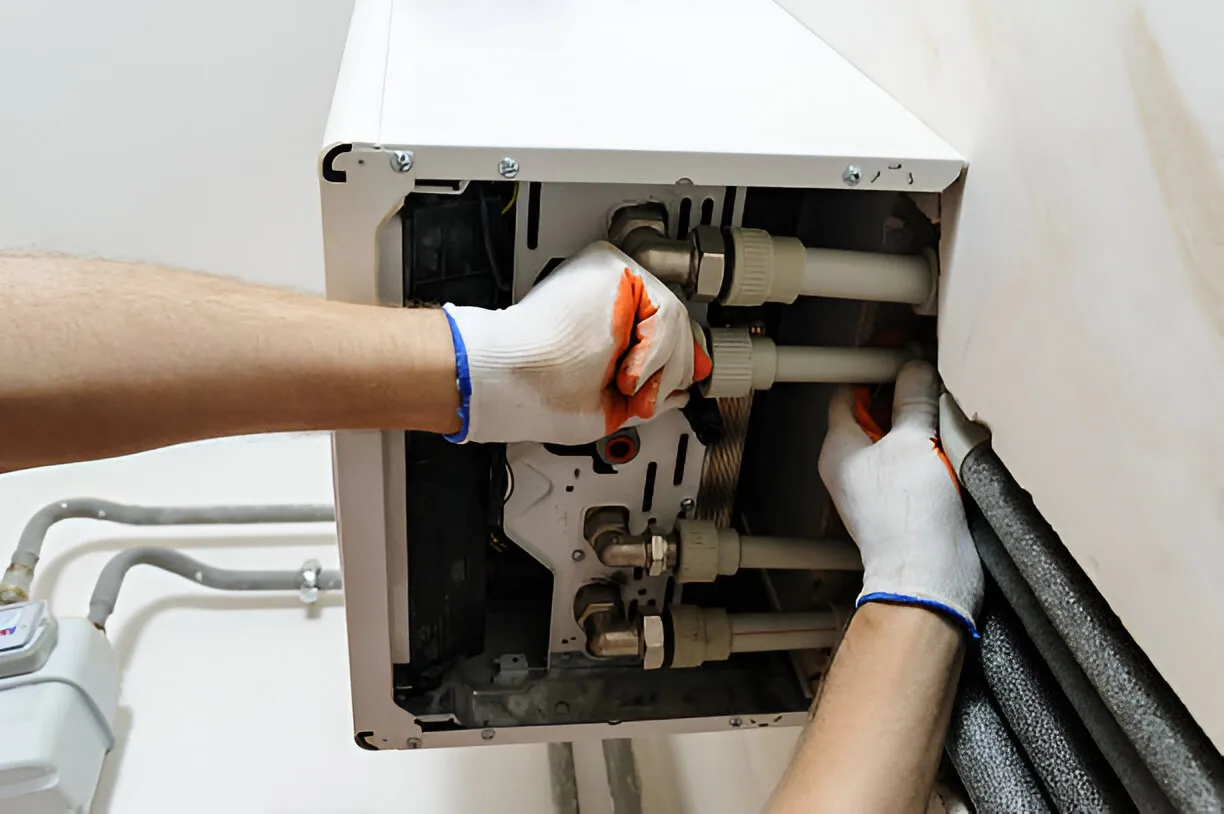
A comprehensive heating maintenance visit covers inspection, cleaning, testing, and adjustments. Typical line items include:
- Inspection and testing of safety controls and thermostat calibration
- Visual and mechanical inspection of the heat exchanger, burners, flue, or combustion chamber (for gas systems)
- Electrical system check: wiring, capacitors, contactors, and system voltages
- Motor and blower inspection, cleaning, and lubrication as needed
- Filter inspection and replacement recommendation (or replacement if provided in the plan)
- Outdoor unit cleaning: coil and fan clearing for heat pumps and mini-splits
- Refrigerant level check and defrost cycle verification for heat pumps
- Condensate drain inspection and clearance to prevent water damage
- Combustion analysis and carbon monoxide safety checks for gas-fired systems
- Overall system performance testing to confirm steady heat output and efficiency
Many providers document each visit with a service report that highlights findings, recommended repairs, and parts replaced or monitored.
How maintenance reduces emergency breakdowns and repair costs
Regular preventative service addresses small issues before they escalate into failures. The benefits for homeowners include:
- Fewer emergency calls during cold snaps when demand spikes
- Reduced likelihood of major component failures (compressors, heat exchangers, motors)
- Lowered repair costs over the system life because wear is identified early
- Improved energy efficiency, which reduces monthly heating costsIndustry experience shows that systems serviced regularly experience significantly fewer emergency repairs and longer trouble-free operation than neglected systems.
Membership and plan benefits (what membership typically includes)
A formal maintenance membership or plan gives predictable care and additional protections:
- Priority scheduling during high-demand periods so you avoid long waits
- Discounted parts and labor on qualifying repairs to lower out-of-pocket expenses
- Waived or reduced diagnostic fees for members (varies by plan)
- Seasonal tune-ups included under the plan schedule so service is not overlooked
- Service history records and reminders to help preserve warranty compliance
- Optional benefits such as filter delivery programs, emergency hours coverage, or HVAC system performance checks
These perks are especially valuable in Lake Conroe, where winter weather can be intermittent and call volumes spike suddenly.
Expected lifespan improvements and efficiency gains
Routine maintenance does more than prevent emergencies; it preserves the value and performance of your system. Regularly maintained heating equipment typically:
- Runs more efficiently, translating into lower monthly energy bills
- Retains operating capacity longer, often adding several years to expected service life
- Experiences fewer premature major-component failuresWhile exact results depend on equipment age, model, and usage patterns, consistent maintenance is one of the most cost-effective ways to protect your heating investment.
Diagnostic approach and repair transparency
When maintenance uncovers issues, a clear diagnostic process helps homeowners make informed decisions:
- Technicians document symptoms and test results
- Problems are categorized (safety, performance, or optional improvements)
- Repair options are explained with expected benefits and impacts on efficiency and reliability
- Repairs focused on high-risk or safety items are prioritized to reduce immediate failure riskThis systematic approach reduces surprises and helps you choose the right path for long-term comfort and value.
Simple homeowner maintenance tips between visits
Small habits reduce strain on your system and extend time between professional services:
- Replace or clean filters regularly (every 1–3 months depending on use and filter type)
- Keep outdoor units free of vegetation, leaves, and debris
- Maintain clear airflow around vents and return registers inside the home
- Monitor for unusual noises, odors, or frequent cycling—document and report these early
- Use programmable or smart thermostats to avoid excessive system cycling
Maintenance Plan
Heat Pump/ AC Tune-Up

Furnace Tune-Up
Customer Testimonials